


Heating piping valve selection guide
Addtime:2025-03-10 From: View:542
In heating piping systems, the choice of valves is crucial, and different types of valves are used in a wide range of scenarios because of their unique functional characteristics. Below are several common valves and their typical applications:
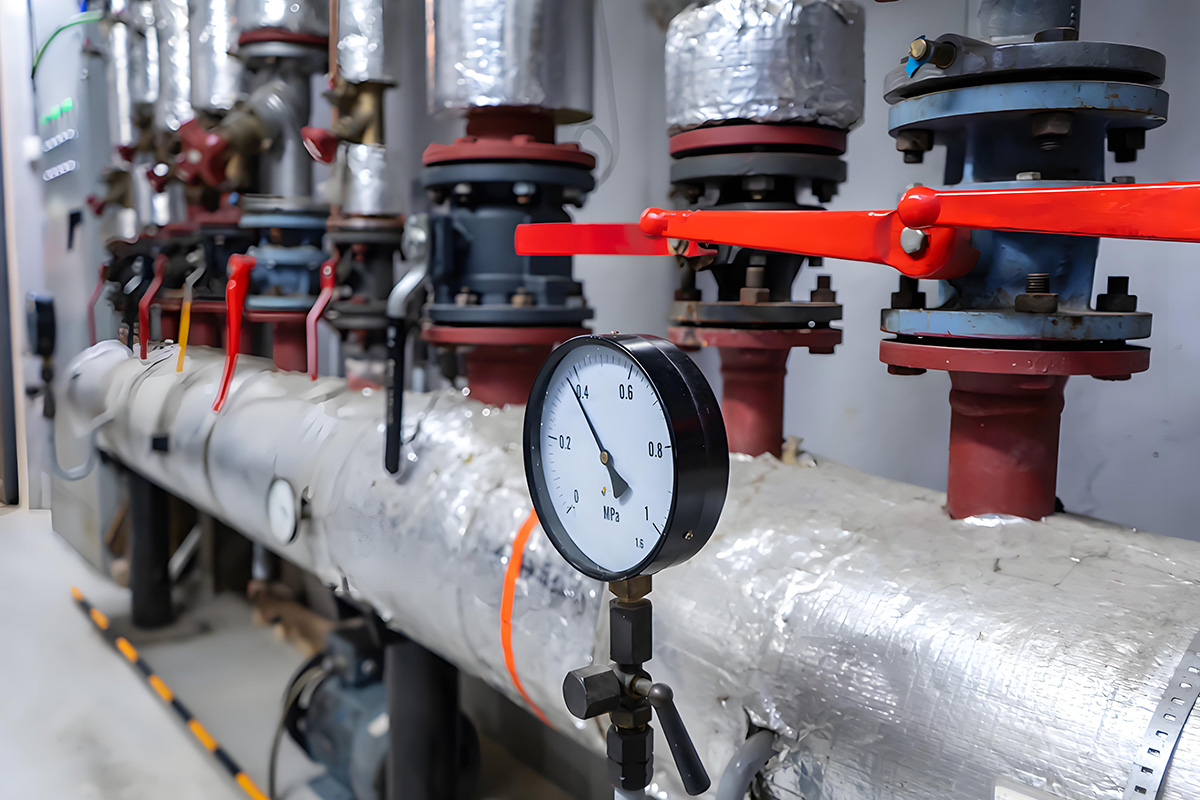
Ball Valve
Ball valve through the rotation of the ball with a center opening to control the medium on and off, with easy operation, excellent sealing performance and small pressure loss. It is usually used for the rapid opening and closing of the main pipeline or branch pipe, especially suitable for the need to completely cut off the fluid occasions, such as maintenance or emergency shutdown. The advantages of ball valves include rapid opening and closing, long service life and low risk of leakage, making them suitable for frequent operation.
Globe Valves
Globe valves regulate the flow rate by the up and down movement of the valve flap, although the pressure loss is larger, but its regulation precision is higher. It is mostly used in applications that require precise flow control, such as radiator branches or equipment inlets, and can effectively achieve heat balance. However, prolonged partial opening may lead to wear of the valve seat and affect its performance.
Gate Valves
The gate valve controls the passage of the medium through the vertical rise and fall of the gate plate. It has very little flow resistance when fully open, but is not suitable for flow regulation. It is usually used in fully open or fully closed low frequency operation scenarios, such as the main heating trunk. It should be noted that long-term partial opening may lead to gate vibration and sealing surface damage.
Butterfly Valve
Butterfly valve controls the flow by rotating the disc, featuring compact structure and low cost, but the sealing is relatively weak. It is suitable for opening and closing or rough adjustment of large-diameter pipelines, such as district heating mains. In the high temperature and high pressure environment, it is necessary to use high-performance sealing materials, such as metal hard seal.
Counterbalance valve
Counterbalance valve is specially designed for hydraulic balance, which can measure and adjust the flow rate to ensure the even distribution of heat in each branch of the system. It is mostly used in the commissioning stage of complex heating systems to solve the problem of “near hot and far cold”. Some models also have integrated measuring ports, which can be used with special instruments for flow calibration.
Check Valve
Check valves are designed for one-way flow to prevent water hammer or pump reversal caused by backflow of media. It is usually installed at the outlet of circulation pumps or at critical system nodes to protect equipment safety.
Automatic Air Venting Valve
Automatic air venting valves are used to remove air accumulated in the pipeline to avoid poor circulation or noise problems caused by air blockage.
In practice, ball valves and globe valves are used most frequently. Ball valves are preferred for opening and closing due to their easy operation and reliable sealing, while globe valves are indispensable in scenarios requiring fine adjustment. Counterbalance valves are particularly important in large central heating systems, but may not be necessary for small household systems.
Selection requires consideration of media characteristics (e.g. temperature, pressure), frequency of operation, regulation requirements and cost. For example, high-temperature hot water pipeline can be preferred metal-sealed ball valves or high-performance butterfly valves; household regulation is more suitable for the use of globe valves or thermostatic valves; if you focus on the ease of maintenance, flanged valves are easier to dismantle, but the cost of threaded connections is lower.
If there are specific system parameters (such as pipe diameter, working pressure, temperature range), can further refine the recommended models or materials (such as cast steel, stainless steel or brass valves). The CV value of the valve also needs to be calibrated during professional design to ensure that the hydraulic characteristics are matched.