


The difference between forged steel ball valves and cast steel ball valves
Addtime:2022-07-07 From: View:518
The forged steel ball valve is a valve made by casting. Generally, the pressure ratings of cast valves are relatively low (such as PN16, PN25, PN40, but there are also high-pressure ones, up to 1500LB, 2500LB). The diameters of most of them are above DN50. The forged valve is produced by forging. It is usually used in high-pressure pipelines and has a smaller diameter, generally below DN50. The opening and closing element (the ball) of the cast steel ball valve is driven by the valve stem and rotates around the axis of the valve stem. It is mainly used to cut off or connect the medium in the pipeline, and can also be used for the regulation and control of fluids. Among them, the hard-sealed V-type ball valve has a strong shear force between the V-shaped ball core and the welded hard alloy metal valve seat, and is particularly suitable for media containing fibers, tiny solid particles, etc.
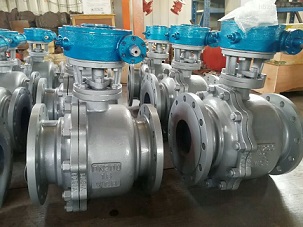
The manufacturing standards for cast steel ball valves:
Product standards
"General Valves - Flanged and Welded Connection Steel Ball Valves" GB/T 12237-89
"Cast Iron and Copper Ball Valves" GB/T 15185-1994
"Steel Valves - General Requirements" GB/T 12224-2005
"Standard for Safety Evaluation of Drinking Water Supply and Distribution Equipment and Protective Materials" GB/T 17219-1998
2. Engineering Standards
"Code for Quality Acceptance of Construction of Building Water Supply, Drainage and Heating Systems" GB 50242-2002
"Code for Quality Acceptance of Ventilation and Air Conditioning Engineering Construction" GB 50243-2002
The function of the cast steel ball valve:
The fluid resistance is low, and its resistance coefficient is equal to that of a pipe section of the same length.
2. Simple structure, small size, and light weight.
3. Compact and reliable, the sealing surface material of ball valves is widely made of plastic. They have excellent sealing performance and have been widely used in vacuum systems as well.
4. The operation is convenient, with quick opening and closing. From fully open to fully closed, it only requires a 90° rotation, making it easy to control from a distance.
5. Easy to maintain. The ball valve has a simple structure and the sealing rings are usually movable. Therefore, disassembly and replacement are quite convenient.
6. When fully open or fully closed, the sealing surfaces of the sphere and the valve seat are isolated from the medium. When the medium passes through, it will not cause erosion to the valve sealing surfaces.
7. Wide application range, with diameters ranging from a few millimeters to several meters. It can be applied from high vacuum to high pressure.
Ball valves have been widely used in various fields such as petroleum, chemical industry, power generation, papermaking, atomic energy, aviation, rockets, etc., as well as in people's daily lives.
The manufacturing standards for cast steel ball valves:
Product standards
"General Valves - Flanged and Welded Connection Steel Ball Valves" GB/T 12237-89
"Cast Iron and Copper Ball Valves" GB/T 15185-1994
"Steel Valves - General Requirements" GB/T 12224-2005
"Standard for Safety Evaluation of Drinking Water Supply and Distribution Equipment and Protective Materials" GB/T 17219-1998
2. Engineering Standards
"Code for Quality Acceptance of Construction of Building Water Supply, Drainage and Heating Systems" GB 50242-2002
"Code for Quality Acceptance of Ventilation and Air Conditioning Engineering Construction" GB 50243-2002
The function of the cast steel ball valve:
The fluid resistance is low, and its resistance coefficient is equal to that of a pipe section of the same length.
2. Simple structure, small size, and light weight.
3. Compact and reliable, the sealing surface material of ball valves is widely made of plastic. They have excellent sealing performance and have been widely used in vacuum systems as well.
4. The operation is convenient, with quick opening and closing. From fully open to fully closed, it only requires a 90° rotation, making it easy to control from a distance.
5. Easy to maintain. The ball valve has a simple structure and the sealing rings are usually movable. Therefore, disassembly and replacement are quite convenient.
6. When fully open or fully closed, the sealing surfaces of the sphere and the valve seat are isolated from the medium. When the medium passes through, it will not cause erosion to the valve sealing surfaces.
7. Wide application range, with diameters ranging from a few millimeters to several meters. It can be applied from high vacuum to high pressure.
Ball valves have been widely used in various fields such as petroleum, chemical industry, power generation, papermaking, atomic energy, aviation, rockets, etc., as well as in people's daily lives.