


Why install a pressure reducer on the gas cylinder?
Addtime:2021-05-20 From: View:446
Pressure reducing valve
The pressure reducing valve of the household gas cylinder is also known as the low-pressure valve. Its standard name is "Household Bottled Liquefied Petroleum Gas Pressure Regulator". It is widely used in thousands of households and is closely related to our life safety.
The pressure reducing valve is a type of valve that regulates the inlet pressure to a certain required outlet pressure. It relies on the energy of the medium itself to automatically maintain the outlet pressure at a stable level.
Please provide the text that needs to be translated accurately and fluently into
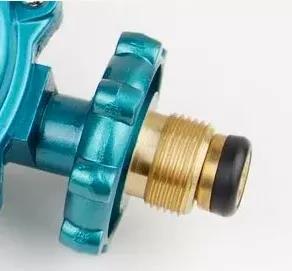
From the perspective of fluid mechanics, a pressure reducing valve is a throttling element with variable local resistance. That is, by changing the throttling area, the flow velocity and the kinetic energy of the fluid are altered, resulting in different pressure losses, thereby achieving the purpose of pressure reduction.
2. The function of the pressure reducing valve
The pressure reducing valve of a household gas cylinder is also known as a low-pressure valve. Its standard name is "Household Bottled Liquefied Petroleum Gas Pressure Regulator". It is widely used in thousands of households and is closely related to our life safety.
The pressure reducing valve is a type of valve that regulates the inlet pressure to a certain required outlet pressure. It operates by relying on the energy of the medium itself to automatically maintain the outlet pressure at a stable level. From the perspective of fluid mechanics, a pressure reducing valve is a throttling element with variable local resistance. That is, by changing the throttling area, the flow velocity and the kinetic energy of the fluid are altered, resulting in different pressure losses, thereby achieving the purpose of pressure reduction.
3. Classification of Pressure Reducing Valves
Low-pressure valve, medium-pressure valve, high-pressure valve
Prohibitions for Using Pressure Reducing Valves
The pressure in the gas cylinder is relatively high. If it is directly connected to the stove, it will first cause the flame of the stove to be unstable; secondly, directly connecting high-pressure gas to the stove will pose safety hazards, as the excessively high pressure is prone to causing leaks during combustion; thirdly, the large amount of gas rushing out generates a powerful flame, which greatly wastes energy (the complete combustion of household gas with a large flame is completely unnecessary, and the incompletely burned gas is harmful to the human body); fourthly, the high-pressure valve has a high pressure and fast flow rate, which is very likely to fail to ignite and release the liquefied gas into the air. Repeated ignition is likely to ignite the mixed gas and cause an explosion, and in severe cases, it can indirectly lead to the explosion of the liquefied gas cylinder.
Everyone must pay attention that the pressure reducing valve for household gas stoves must be a genuine one with the marking JYT-0.6, an imported pressure of no more than 1.56 Mpa, an outlet pressure of 2800 pa ± 500 pa, and it must be an unadjustable pressure reducing valve.
The pressure reducing valves available on the market come in various types and have inconsistent quality. Therefore, when purchasing pressure reducing valves, we must be cautious and ensure that we buy those that are produced by reputable manufacturers and are of qualified quality. This is to prevent being deceived and purchasing counterfeit or substandard products.
The pressure reducing valve of the household gas cylinder is also known as the low-pressure valve. Its standard name is "Household Bottled Liquefied Petroleum Gas Pressure Regulator". It is widely used in thousands of households and is closely related to our life safety.
The pressure reducing valve is a type of valve that regulates the inlet pressure to a certain required outlet pressure. It relies on the energy of the medium itself to automatically maintain the outlet pressure at a stable level.
Please provide the text that needs to be translated accurately and fluently into
From the perspective of fluid mechanics, a pressure reducing valve is a throttling element with variable local resistance. That is, by changing the throttling area, the flow velocity and the kinetic energy of the fluid are altered, resulting in different pressure losses, thereby achieving the purpose of pressure reduction.
2. The function of the pressure reducing valve
The pressure reducing valve of a household gas cylinder is also known as a low-pressure valve. Its standard name is "Household Bottled Liquefied Petroleum Gas Pressure Regulator". It is widely used in thousands of households and is closely related to our life safety.
The pressure reducing valve is a type of valve that regulates the inlet pressure to a certain required outlet pressure. It operates by relying on the energy of the medium itself to automatically maintain the outlet pressure at a stable level. From the perspective of fluid mechanics, a pressure reducing valve is a throttling element with variable local resistance. That is, by changing the throttling area, the flow velocity and the kinetic energy of the fluid are altered, resulting in different pressure losses, thereby achieving the purpose of pressure reduction.
3. Classification of Pressure Reducing Valves
Low-pressure valve, medium-pressure valve, high-pressure valve
Prohibitions for Using Pressure Reducing Valves
The pressure in the gas cylinder is relatively high. If it is directly connected to the stove, it will first cause the flame of the stove to be unstable; secondly, directly connecting high-pressure gas to the stove will pose safety hazards, as the excessively high pressure is prone to causing leaks during combustion; thirdly, the large amount of gas rushing out generates a powerful flame, which greatly wastes energy (the complete combustion of household gas with a large flame is completely unnecessary, and the incompletely burned gas is harmful to the human body); fourthly, the high-pressure valve has a high pressure and fast flow rate, which is very likely to fail to ignite and release the liquefied gas into the air. Repeated ignition is likely to ignite the mixed gas and cause an explosion, and in severe cases, it can indirectly lead to the explosion of the liquefied gas cylinder.
Everyone must pay attention that the pressure reducing valve for household gas stoves must be a genuine one with the marking JYT-0.6, an imported pressure of no more than 1.56 Mpa, an outlet pressure of 2800 pa ± 500 pa, and it must be an unadjustable pressure reducing valve.
The pressure reducing valves available on the market come in various types and have inconsistent quality. Therefore, when purchasing pressure reducing valves, we must be cautious and ensure that we buy those that are produced by reputable manufacturers and are of qualified quality. This is to prevent being deceived and purchasing counterfeit or substandard products.